

Why a Christian College Education Matters Right Now


Hope College President Outlines the Value of a Christian College Education
At Hope College, we are one of the few institutions in the country that is not named after a person or a place. We are named after our purpose. Hope.
When our founders established this college in the middle of the Civil War, they chose that name intentionally. They believed education should bring hope to a fractured world. More than 160 years later, that calling feels as urgent as ever.
As a college president, I have the responsibility and blessing of helping shape the strategic direction of Hope College. It’s daunting, to be honest. But when I look at the challenges ahead, especially for Christian higher education, I find myself energized by the opportunity.
Last summer, as we began preparing our next five‑year strategic plan, we took an unusual approach. We looked backward. All the way back. We asked: What would it look like to truly be a college that follows Jesus? What if Jesus were a college president? What would that college look like?
Those questions have shaped how we pursue education at Hope College.
Today’s students are navigating a high‑stakes moment. They’re questioning the value of a degree, wrestling with a polarized culture, and wondering how emerging technologies like AI will shape their futures. Gen Z cares deeply about authenticity, purpose, and impact. A liberal arts education centered on Jesus speaks directly to those longings.
Helping Students Find Purpose, Not Just a Career
Despite what students write on their college applications (because we ask them to!), most don’t arrive on campus with a fully mapped‑out life plan. They come with questions — big ones. Who am I? What am I called to do? What kind of life is worth pursuing?
A Christian education can do more than help students get what they want. It can help them discern what is worth wanting. Christian liberal arts colleges prepare students not only for a job, but for life. Our professors see their work as both teaching and ministry. They care about the whole person — intellectual growth, spiritual formation, character development, and the lifelong pursuit of learning. In a fractured world, that kind of formation matters.
Pursuing Truth, Not Just Knowledge
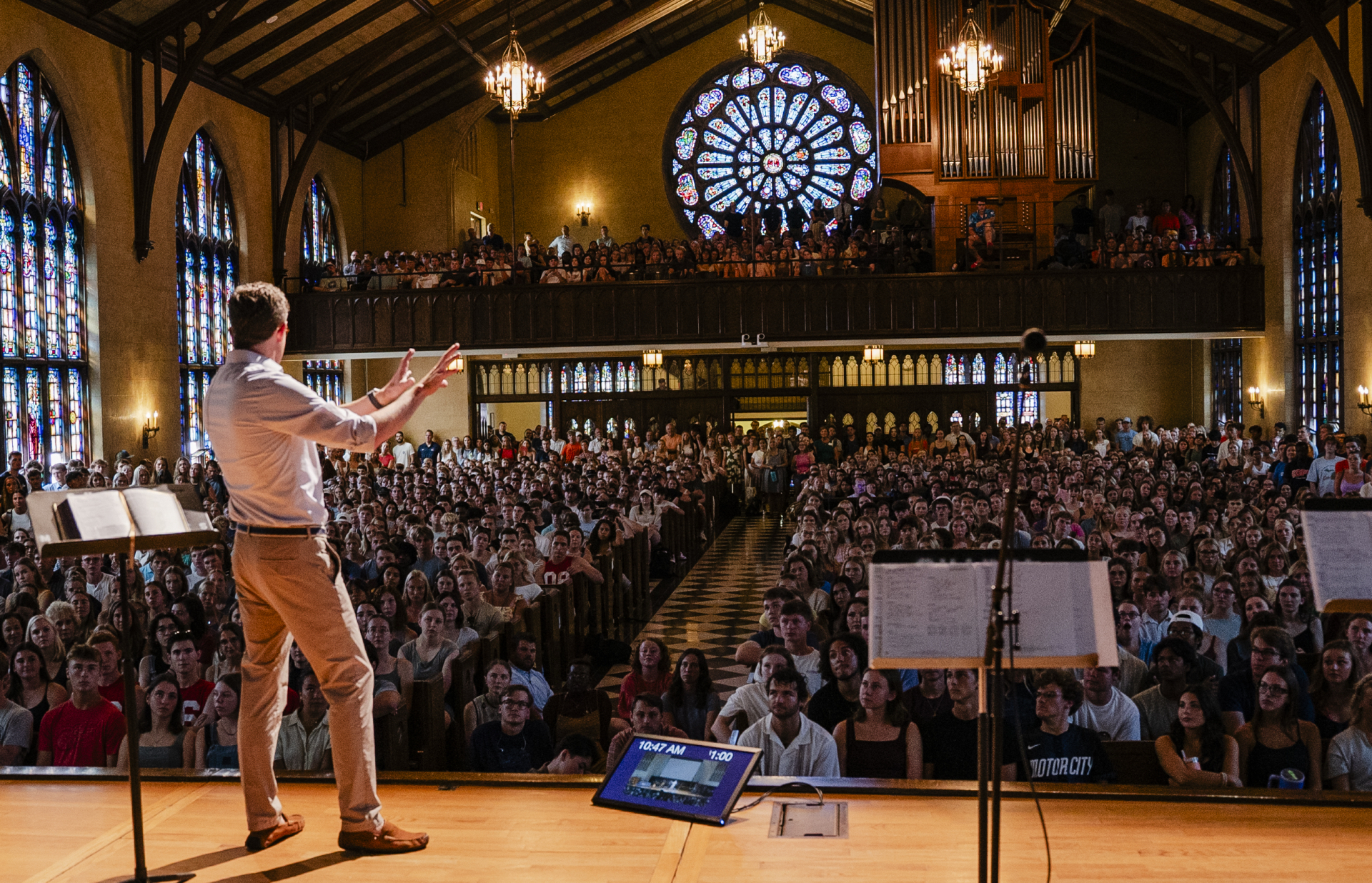
We live in a time when truth feels contested from every direction. But Christians serve a God who doesn’t just point to truth, He personifies it. “I am the truth,” Jesus said.
That means the pursuit of academic excellence and the pursuit of God are not separate endeavors. They are one and the same. When students ask hard questions, wrestle with ideas, and engage diverse viewpoints, they are not moving away from faith — they are moving toward the One who is Truth itself.
A Christian college should be the best place to explore difficult questions with courage and wonder.
Making Education Accessible
College is becoming less accessible for far too many families. As a college that follows Jesus — the one who said, “Whoever wants to be my disciple…” WHOEVER! — We believe access matters.
Hope Forward, our pay‑it‑forward tuition model, and our anchored tuition pledge are rooted in a simple conviction: education should not be reserved for the wealthy. If we want to form the next generation of leaders, we must ensure that students from every background can afford to be here.
Building Human Community in a High‑Tech Age
The triune God we serve represents perfect community — three distinct persons, one unified being. Human beings are made in that image. We are created for relationships.
As human community breaks down, hope evaporates and despair rises. With the world taking a hard turn toward AI and automation, the most human traits — curiosity, creativity, empathy, broad thinking — will only grow more valuable.
In a society becoming more high‑tech, we intend to become more high‑touch. Christian colleges can offer a depth of belonging that is increasingly rare: small classes, mentoring relationships, authentic worship, student groups, and a community where students can be known.
Graduates Who Bring Hope Into the World
A sense of hopelessness permeates our culture. But followers of Jesus ought to have a different posture. We can take the suffering of the world seriously and approach it with real hope, because we believe that with God, all things are possible.
Our graduates enter the world not only with skills, but with a sense of calling. They are prepared to lead, serve, and heal divides. They are equipped to bring hope into places that desperately need it.
Christian higher education matters right now because hope matters right now. Our founders believed education could be a force for hope in a broken world. We still believe that. And as we look to the future, we are convinced that following the example of Jesus, our savior and the greatest teacher who ever lived, is the best way to prepare students to lead and serve in a global society.
About the author: Matt Scogin, Hope College President
%201%20(2)%20(1).png)
Matthew Scogin is the 14th president of Hope College, serving in the role since July, 2019. Before then, Scogin had a distinguished career in both the corporate and government sectors. He served as chief administrative officer at Perella Weinberg Partners in New York City and held senior positions at the New York Stock Exchange and the U.S. Treasury Department. His leadership at the NYSE involved guiding the company through significant change, and at the Treasury Department, he advised on economic and financial policy.
Scogin is a 2002 graduate of Hope College, holds a master’s degree in public policy from Harvard University and has been actively involved with Hope College since graduation, including serving on the Board of Trustees.


